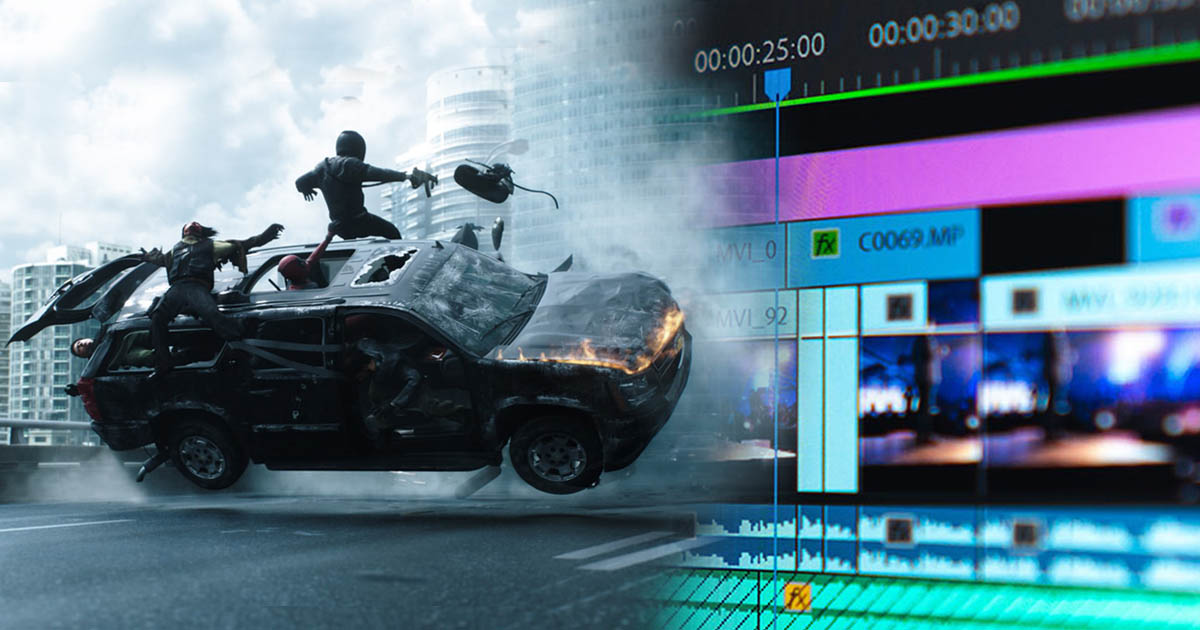

Cinematography is the art and technique of capturing moving images to tell a story or convey visual concepts in cinema. It combines technical principles, visual creativity, and a deep understanding of storytelling to create images that are not only beautiful but also emotionally and narratively compelling.
Key elements of cinematography include composition, lighting, camera angles, camera movement, color and filters, framing, and visual storytelling. These fundamentals serve as the essential tools and techniques filmmakers use to communicate their story and create visual impact. Each element works together to convey the mood, meaning, and structure of a scene in a cohesive and effective way.
Skilled filmmakers often use these elements creatively sometimes even magically to transport audiences into new worlds and experiences. In this sense, the tools of cinematography can act like “magical elements,” transforming ordinary reality into something extraordinary and beyond the viewer’s imagination.
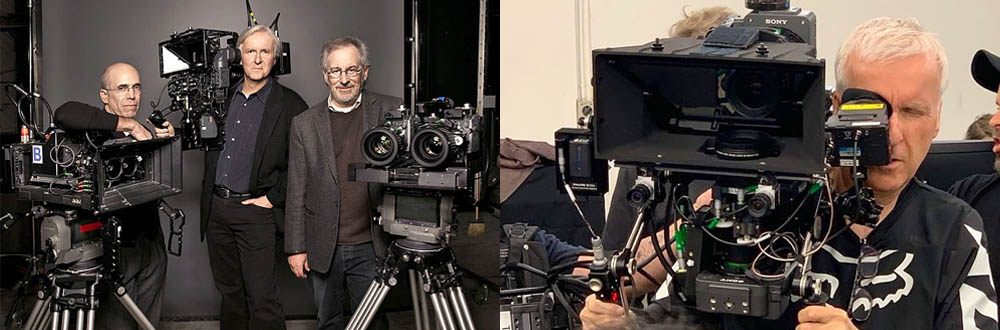
The Role and Importance of Cinematography Elements
The significance and function of cinematography elements can be summarized as follows:
-
Creating the Film’s Visual Language: The core elements of cinematography allow filmmakers to convey emotions, develop characters, and tell the story through images rather than words.
-
Guiding the Audience’s Attention: Composition, lighting, and framing direct the viewer’s focus to key parts of the image, guiding them through the narrative.
-
Enhancing Mood and Atmosphere: Choices in camera angles, colors, and lighting can heighten emotions such as fear, love, or tension, drawing the audience deeper into the story.
-
Defining the Film’s Identity: Each element contributes to the film’s visual identity, helping it develop a unique style and tone.
Key Elements of Cinematography
-
Composition:
In cinematography, composition refers to the arrangement of visual elements within the frame to effectively communicate a message, emotion, or narrative purpose. Good composition not only creates aesthetic appeal but also strengthens storytelling by directing the audience’s attention to the most important parts of a scene.
Key principles and features of composition in cinematography include:
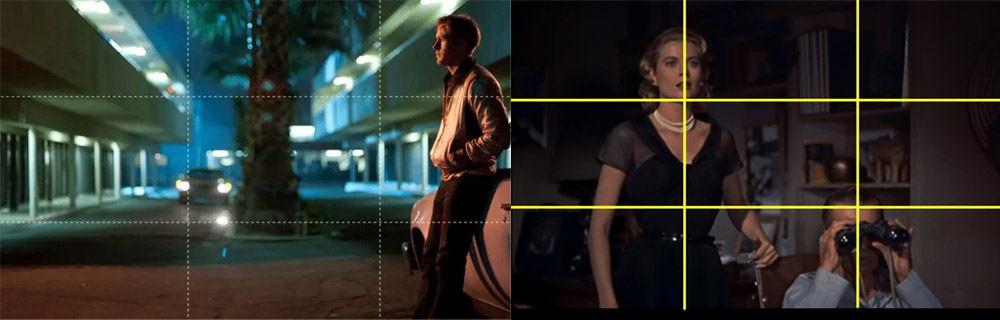
Cinematography Elements – Composition (continued)
Key Principles of Composition:
-
Rule of Thirds: Divide the frame into three horizontal and three vertical sections. Placing subjects at the intersections of these lines creates visual balance and appeal.
-
Balance: Evenly distributing elements in the frame prevents the image from feeling cluttered or chaotic. This can be symmetrical or asymmetrical, depending on the intended mood.
-
Depth: Using multiple layers (foreground, midground, background) adds depth and makes the scene appear more realistic.
-
Leading Lines: Incorporating natural or architectural lines (like roads, bridges, or walls) guides the viewer’s eye toward the main subject.
-
Focal Point: Emphasizing a specific point in the frame that represents the most important part of the scene, often highlighted through lighting, color, or position.
-
Negative Space: Using empty space around a subject to emphasize it and create feelings of calmness or solitude.
-
Contrast: Using differences in brightness, color, or size to draw attention to the subject.
-
Framing: Placing the subject within natural frames (such as windows, arches, or trees) to focus attention and create visual interest.
Role of Composition in Cinematography:
-
Guiding the Viewer’s Eye: Good composition naturally directs the audience’s attention to key areas of the frame.
-
Creating Mood and Atmosphere: Proper arrangement of elements can evoke emotions like calmness, tension, or energy.
-
Visual Storytelling: Composition allows filmmakers to communicate important story details visually, without relying on dialogue.
In essence, composition is the foundation of a powerful image, enabling filmmakers to tell their story artistically and memorably through creative visual arrangements.
2. Lighting
Lighting is one of the most crucial visual elements in cinematography, profoundly affecting the image’s quality, mood, and narrative. Through lighting, directors and cinematographers can create specific visual effects, influence the audience’s emotions, and direct attention to key parts of the scene.
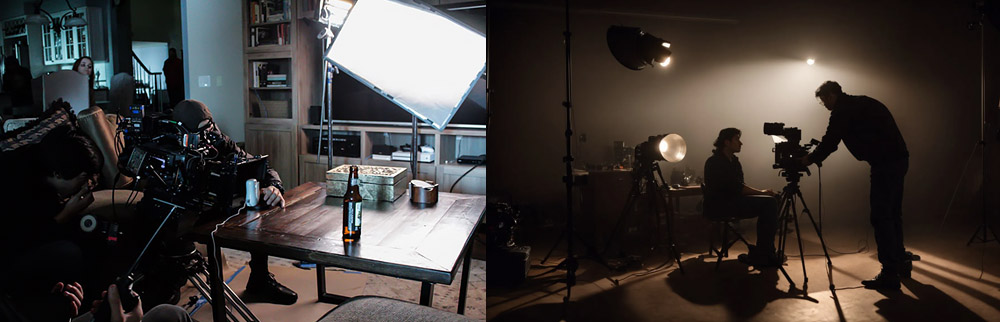
Key Features and Principles of Lighting in Cinematography:
Types of Light:
-
Natural Light: Using existing environmental light sources, such as sunlight or moonlight.
-
Artificial Light: Using lamps, projectors, or other lighting equipment designed for better control over illumination.
-
Light Intensity: The brightness of light, which can make a scene feel cheerful, dark, or dramatic. Intensity is usually adjusted to create contrast between the main light and shadows.
Light Quality:
-
Hard Light: Creates sharp shadows and high contrast, suitable for dramatic or tense scenes.
-
Soft Light: Produces gentle shadows and even illumination, ideal for calm or tender moments.
Light Angle:
The direction from which light falls on the subject greatly affects the look and mood of a scene:
-
Front Lighting: Reduces shadows and highlights details.
-
Side Lighting: Adds depth and emphasizes texture.
-
Backlighting: Creates a dramatic effect or highlights the subject’s outline.
-
Lighting from Above or Below: Produces unusual effects or evokes a mysterious or eerie mood.
Key Lighting Sources:
-
Key Light: The main light source providing the primary illumination of the scene.
-
Fill Light: Used to soften shadows created by the key light.
-
Back Light: Separates the subject from the background and adds depth.
-
Colored Light: Using filters or colored light sources to create a specific mood—warm light for intimacy, cool light for mystery or tension.
Lighting in cinematography goes beyond technical function; it is an artistic tool. By combining creativity with technical skill, lighting draws the audience into the film’s world and leaves a lasting emotional impact.
3. Camera Angles:
Camera angles are a fundamental element of cinematography, referring to the position and perspective of the camera relative to the subject or scene. Camera angles play a vital role in how audiences perceive the narrative, characters, and emotions in a scene. Each angle can convey a specific feeling and guide the viewer’s attention to particular aspects of the story or environment.
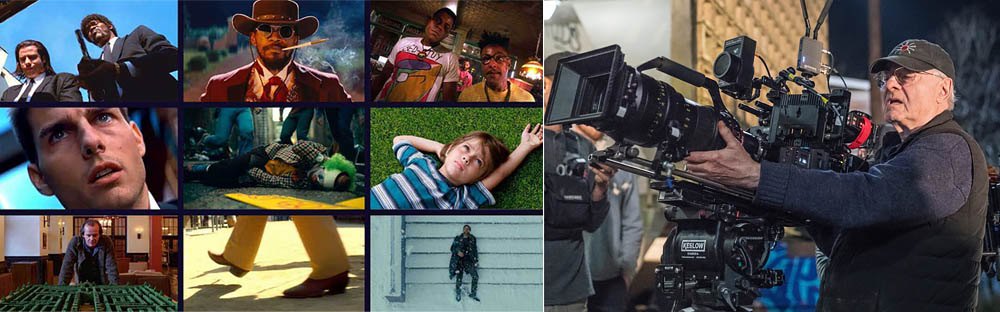
Types of Camera Angles and Their Uses: (Camera Angles in Cinematography:)
-
Eye Level: The camera is positioned at the character’s eye level. It gives a natural, realistic feel to the scene and is often used for dialogue or everyday moments.
-
High Angle: The camera looks down on the subject. This makes the subject appear small, weak, or vulnerable. It’s useful for showing a character’s powerlessness or creating feelings of fear and despair.
-
Low Angle: The camera looks up at the subject. This makes the subject appear larger, stronger, or intimidating. Often used for powerful characters or awe-inspiring moments.
-
Dutch Angle (Tilted Shot): The frame is tilted or slanted. It conveys instability, tension, or excitement, and is commonly used in action or psychological scenes.
-
Close-Up: Focuses on a character’s face or a specific detail. Ideal for showing deep emotions or highlighting important elements.
-
Extreme Close-Up: Focuses on a very small part, such as an eye, hand, or object. Used to emphasize details or build tension.
-
Long Shot: Shows the entire subject within the frame. Helps display the subject’s interaction with the environment or provide more context about the scene.
-
Extreme Long Shot: Shows the subject within a much larger environment or landscape. Useful for creating a sense of scale, isolation, or establishing geographic context.
-
Overhead / Bird’s Eye View: The camera looks directly down from above the subject. Conveys a sense of observation, detachment, or surveillance.
-
Over the Shoulder: The scene is shown from behind a character’s shoulder. Commonly used in conversations or chase sequences.
-
Tracking / Dolly Shot: The camera follows the subject. Creates movement, dynamism, and a sense of following or accompanying the character.
-
Worm’s Eye View: The camera is placed at ground level, looking up at the subject. Emphasizes grandeur or highlights objects and the environment from a low perspective.
Impact of Camera Angles on Storytelling:
The choice of camera angle directly affects how the audience perceives and feels a scene. A well-chosen angle can strengthen the scene’s message and add depth to the narrative. For directors and cinematographers, understanding and creatively using camera angles is an essential tool for crafting powerful, memorable scenes.
4. Camera Movement:
Camera movement is a fundamental element of cinematography that involves physically moving the camera to create dynamism, depth, and enhance storytelling. Proper camera movement can bring life and energy to a scene while guiding the audience’s attention to specific aspects of the story.
Types of Camera Movements and Their Uses:
-
Pan: The camera rotates horizontally from a fixed position. Often used to follow a subject or reveal more of the environment.
-
Tilt: The camera moves vertically up or down from a fixed position. Useful for showing height, emphasizing a subject, or revealing vertical spaces.
-
Dolly / Tracking: The camera moves smoothly toward, away from, or alongside the subject, creating a sense of motion and closeness.
-
Crane / Jib: The camera moves vertically or over a scene using a crane or jib arm, providing sweeping, cinematic shots from above.
-
Handheld: The camera is held by the operator, creating a raw, shaky, and immersive feel. Often used in action or intense emotional scenes.
-
Steadicam / Gimbal: The camera moves smoothly while being stabilized, allowing fluid motion without the shake of handheld shots.
-
Zoom: The camera lens changes focal length to make the subject appear closer or farther without moving the camera physically. Can create dramatic emphasis or draw attention to details.
-
Rack Focus / Focus Pull: The focus shifts from one subject to another within the frame, guiding the viewer’s attention and emphasizing key narrative elements.
Impact of Camera Movement on Storytelling:
Camera movement affects how viewers experience a scene. It can create tension, excitement, intimacy, or grandeur, depending on how it’s executed. Directors and cinematographers use movement creatively to immerse the audience, reveal information gradually, and enhance the emotional and visual impact of a film.
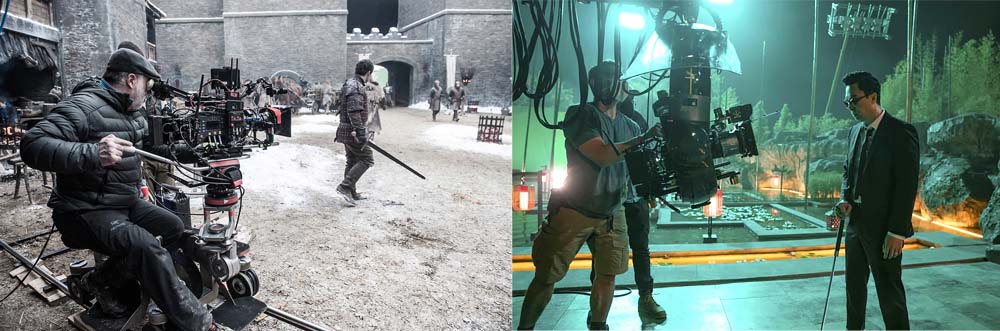
The Role of Camera Movement in Cinematography:
-
Creating a Sense of Dynamism: Camera movement brings scenes to life, making them feel more vivid and engaging.
-
Enhancing Emotions: Different types of movement can amplify feelings such as calmness, tension, or excitement.
-
Directing Attention: Camera motion helps guide the audience’s focus to key points in the scene.
-
Defining Space and Environment: Moving the camera allows the audience to better perceive the dimensions and layout of a scene or setting.
-
Connecting with Characters: Following the movements of characters creates a sense of closeness and immersion.
![Camera Movements in Cinematography]()
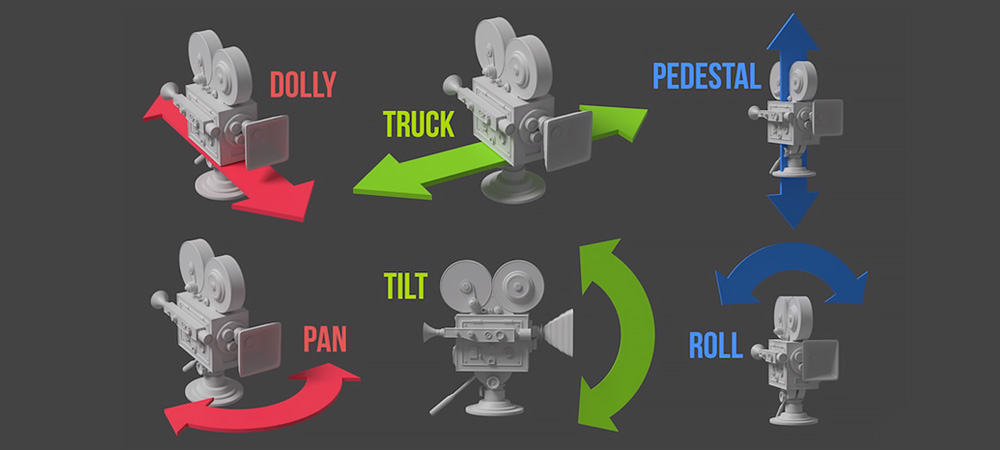
In summary, camera movement is both an artistic and technical tool that allows filmmakers to tell their story more effectively. Choosing the right type of movement for each scene can dramatically improve the visual experience and deepen the audience’s connection with the narrative.
Lens Type and Focus:
Lens selection and focus are fundamental elements of cinematography that directly affect how images are portrayed and how the audience perceives space, subjects, and details. These elements determine which parts of the frame stand out and how viewers experience the visual storytelling.
1. Lens Types:
Lenses, based on their focal length and optical characteristics, shape how the subject and background are displayed. Common lens types include:
-
Wide-Angle Lens: Short focal length (less than 35mm). Provides a wide field of view, ideal for capturing expansive landscapes or creating a sense of depth. Edge distortion may occur, sometimes used creatively for dramatic effects.
-
Standard Lens: Focal length around 35–50mm. Closely approximates the natural human eye perspective, suitable for everyday, realistic scenes.
-
Telephoto Lens: Long focal length (over 70mm). Magnifies subjects and compresses the perceived distance between them, ideal for close-up shots from afar.
-
Macro Lens: Designed for close-up photography and cinematography. Perfect for highlighting fine details such as textures, small objects, or specific elements in a scene.
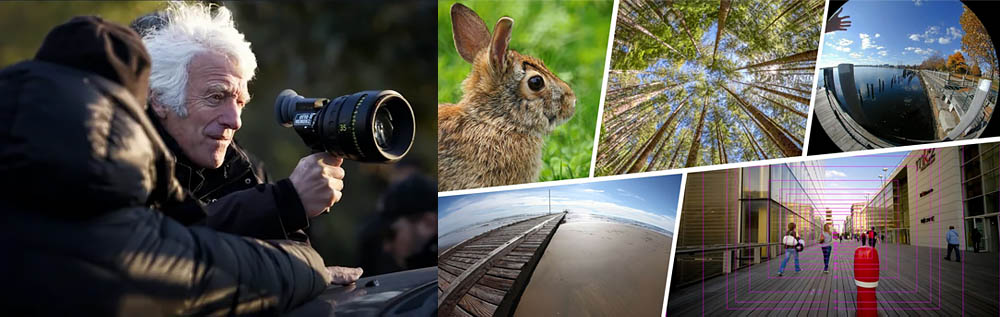
Fisheye Lens: Extremely short focal length with an ultra-wide field of view. Produces heavily distorted images, often used for artistic or creative effects.
Zoom Lens: Adjustable focal length, from wide-angle to telephoto. Offers high flexibility to change the framing without moving the camera.
Prime Lens: Fixed focal length with high image quality. Ideal for scenes that require sharpness and precision.
2. Focus:
Focus determines which part of the image appears sharp and clear. Changing focus can create specific visual and narrative effects. Common focus techniques include:
-
Fixed Focus: The entire frame is in focus at a set distance. Suitable for scenes with stationary subjects or a wide depth of field.
-
Deep Focus: Everything from foreground to background is sharp. Useful for scenes where complete detail across the frame is important.
-
Shallow Focus: Only a specific part of the image is sharp, while the rest is blurred. Used to highlight the main subject or create intimacy.
-
Rack Focus: Shifting focus from one subject to another within a scene. Helps direct the viewer’s attention or establish a relationship between subjects.
Impact of Lens Type and Focus in Filmmaking:
-
Emphasizing Subjects: Lens choice and focus guide the viewer’s attention to key elements in the scene.
-
Creating Depth and Space: Selecting the right lens helps convey the scale and spatial relationships in a scene.
-
Conveying Emotions: Using shallow or deep focus, filmmakers can suggest closeness, distance, or emotional connections between characters.
-
Visual Aesthetics: Creative use of lenses and focus can produce stunning and memorable imagery.
Lens type and focus serve as both artistic and technical tools in cinematography, enabling filmmakers to tell their stories with clarity and impact. Proper selection of these elements can turn an ordinary shot into an extraordinary visual moment.
5. Color and Tone:
Color and tone are key elements in cinematography, significantly influencing the mood, perception, and emotional impact of a film. Through careful choice of colors and adjustments to the image’s temperature, filmmakers can convey subtle emotional cues, reinforce the story’s atmosphere, and shape the visual identity of the narrative.
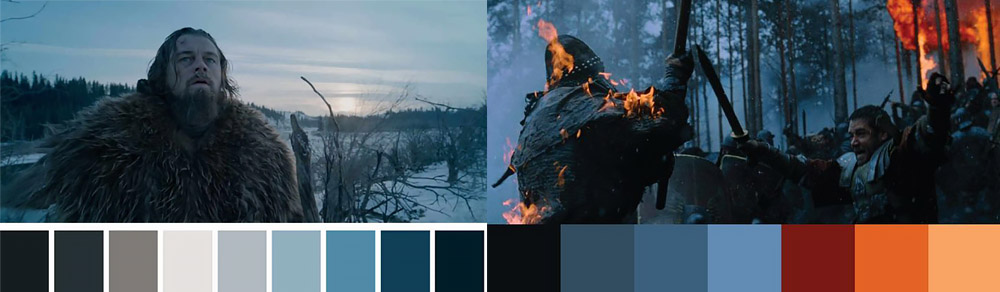
1. Color:
In film, colors do more than create visual appeal—they carry psychological and symbolic meanings, enhancing emotions or reinforcing story elements.
Uses of Color in Cinematography:
-
Setting the Mood:
-
Warm colors (like red, orange, yellow) convey warmth, energy, love, or tension.
-
Cool colors (like blue, green, purple) evoke calmness, sadness, or detachment.
-
-
Establishing Visual Identity: The film’s color palette can give it a unique identity and immerse the audience in its world.
-
Storytelling: Gradual changes in color throughout a film can reflect character development or shifts in the story’s tone.
-
Highlighting Details: Bold or contrasting colors can draw the viewer’s attention to specific elements in the frame.
Tools for Managing Color:
-
Color Grading: Adjusting colors in post-production to create a consistent style and mood.
-
Color Filters: Using filters on lenses to alter the scene’s atmosphere during filming.
-
Colored Lighting: Employing lights with specific colors for visual impact.
2. Tone (Image Temperature):
Tone refers to the balance between warm and cool colors in a scene, shaping the overall emotional feel.
Types of Tone:
-
Warm Tone: Dominated by yellow, orange, or red. Creates intimacy, energy, or excitement. Often used in sunrise/sunset scenes or emotional moments.
-
Cool Tone: Dominated by blue, green, or purple. Evokes coldness, solitude, or mystery. Ideal for nighttime or dramatic scenes.
-
Neutral Tone: A balanced mix of warm and cool colors. Suitable for naturalistic or realistic scenes without emphasizing any particular mood.
Adjusting Image Tone:
Color Temperature:
-
Measured in Kelvin (K).
-
Warm light: below 4000K.
-
Cool light: above 6000K.
-
White Balance: Precisely adjusts colors to maintain a natural and realistic appearance in the image.
Impact of Color and Tone in Film:
-
Creating Emotional Connection: Colors and tone can enhance feelings such as fear, joy, or sadness.
-
Conveying Themes: Choosing a specific color palette or tone can clarify the film’s message or underlying theme.
-
Visual Appeal: Harmonizing colors and tones makes images more attractive and engaging.
-
Conveying Time and Place: Image tone can reflect seasons, time of day, or geographic location.
In summary, color and tone are powerful tools in the filmmaker’s hands, enabling the creation of more engaging, profound, and impactful stories. Properly adjusting these elements can produce lasting images and elevate the viewer’s visual experience.
6. Visual Storytelling:
Visual storytelling is one of the most important and powerful elements of cinematography. It allows filmmakers to convey a story primarily through images and visual elements, without relying heavily on dialogue. Filmmakers use tools like lighting, color, composition, camera movement, and other visual aspects to narrate the story and evoke emotions in the audience.
Key Features and Principles of Visual Storytelling:
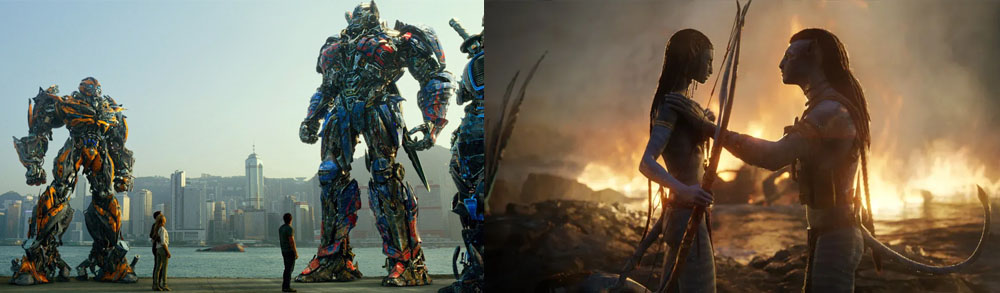
Use of Composition: Proper and artistic composition, meaning the placement of subjects and visual elements within the frame, allows the story to be conveyed indirectly through visual structure. Each element in the frame can communicate a specific message or meaning for example, empty space can evoke feelings of loneliness or isolation.
Lighting: Lighting can significantly alter the mood or atmosphere of a scene. Soft, gentle light may convey calmness or romance, while hard, high-contrast light can create tension or excitement. Light is also used to highlight subjects and emphasize specific details.
Color and Tone: Colors in films are not only aesthetic but also convey emotions and moods. Warm colors like red and orange can express excitement, love, or danger, whereas cool colors such as blue and green can evoke calmness, sadness, or solitude. Image tone can add depth to storytelling and help establish temporal or spatial context.
Camera Movement: Camera movement directly affects how the audience perceives the story. A static camera may suggest stability or stillness, while smooth, continuous movements convey motion and dynamism. Techniques such as dolly or pan shots can create a sense of displacement, pursuit, or journey.
Focus: The choice of focus can emphasize specific details. Deep focus shows everything in the frame clearly, whereas shallow focus directs the viewer’s attention to a single element. Rack focus (shifting focus between subjects) can guide the narrative or the viewer’s attention to different elements within the scene.
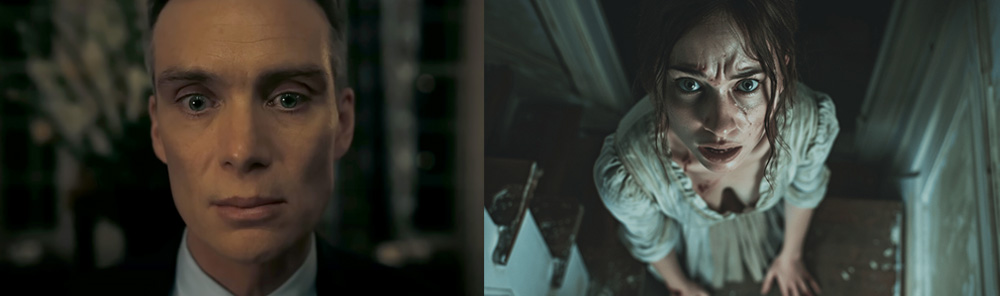
Negative Space and Background Objects: The use of empty space can symbolize loneliness, isolation, or emotional distance. Objects and details in the background can provide additional information about characters, setting, or story context.
Role of Visual Storytelling in Film:
-
Conveying Emotions and Moods: Visual storytelling allows filmmakers to communicate the emotions and feelings of characters without relying on words. For example, a close-up of a character’s face, combined with specific lighting and color choices, can express sadness, anger, or joy.
-
Advancing the Story: Many aspects of the narrative are expressed visually. Changes in lighting or color, for instance, can signal internal transformations in characters or shifts in the story’s situation.
-
Creating Visual Connection with the Audience: Cinematic images can convey complex story elements quickly and intuitively. In horror films, for example, dim lighting and confined spaces can evoke fear without dialogue.
-
Building a Unique Film World: Through visual choices, filmmakers can create a distinct and recognizable universe. This includes set design, color palettes, and the use of negative space, all of which immerse the audience in the film’s specific world.
-
Emphasizing Details: Visual details within the frame can provide key information about characters or the environment. For instance, a particular object in the background may enhance characterization or advance the plot.
In conclusion, visual storytelling in cinematography is a powerful tool that enables filmmakers to convey complex narratives through images and visual choices. Alone, it can enrich a film emotionally and thematically, significantly enhancing the audience’s cinematic experience in a deep and lasting way.
7. Framing:
Framing in cinematography is a fundamental and highly important element that refers to how the boundaries of an image are chosen and how elements within the frame are positioned. This element allows the director and cinematographer to effectively control the audience’s emotions, focus, and the visual impact of the film.
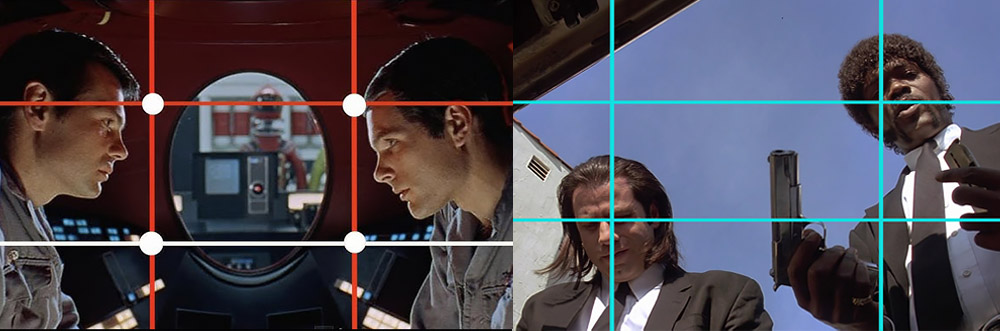
Framing (Framing) in Cinematography
Choice of Camera Angle:
One aspect of framing is selecting the angle from which the camera views the scene. The angle can convey a specific emotion to the audience. For example, a low angle can emphasize a character’s power and dominance, while a high angle can convey weakness or vulnerability.
Frame Dimensions:
The size and aspect ratio of the image, whether horizontal or vertical, significantly affect how the film’s space is perceived. Choosing appropriate frame dimensions for a scene can influence the audience’s emotional response and connection with the story.
Arrangement of Elements Within the Frame:
Framing involves deciding how different components and elements are placed inside the frame. These decisions can emphasize a particular character or a specific detail, guiding the viewer’s focus.
Shape and Boundaries of the Frame:
Frames can be rectangular, square, or even unconventional shapes. Specific cropping can affect how characters and environments are displayed. For example, close-up frames show characters or objects in detail, while wide shots include more of the surrounding space.
Camera Movement:
Camera movements can greatly influence framing. Moving the camera up, down, left, or right can offer a new perspective on the scene, enhancing its emotional impact and visual effect.
Ultimately, framing allows cinematographers and directors to control precisely how the story, emotions, and atmosphere of a film are presented, creating a deeper visual experience for the audience.
Difference Between Composition and Framing:
-
Composition: Refers to how elements are arranged within the frame to achieve balance, harmony, and visual impact. Composition deals with the overall structure of the image and the relationships between elements, emphasizing principles like the rule of thirds, leading lines, and symmetry.
-
Framing: Refers to the selection and adjustment of the boundaries of the image. Framing includes choosing the camera angle, distance, and crop, deciding what enters or exits the frame, and highlighting the subjects within it.
In summary: Composition organizes and interacts with elements inside the frame, while framing focuses on selecting and adjusting the edges and directions of the viewer’s gaze.
Role of the Cinematographer (Cinematographer or DP – Director of Photography):
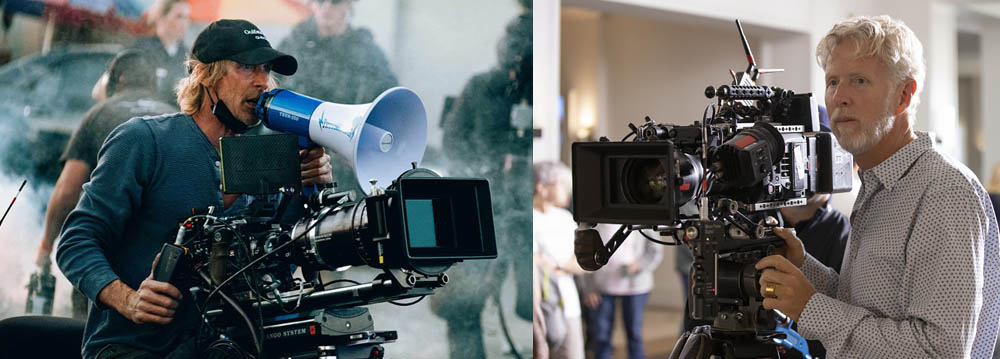
The role of the cinematographer, also known as the DP (Director of Photography), is crucial in cinematography. The cinematographer is responsible for creating the visual imagery and atmosphere of a film.
Working closely with the director and other members of the production team, the cinematographer uses visual tools such as cameras, lenses, lighting, composition, and more to convey the story and emotions of the film.
Responsibilities of the Cinematographer:
-
Visual Design and Style: Define the overall look, mood, and visual style of the film in collaboration with the director.
-
Camera Operation and Choice: Select cameras, lenses, and camera setups to achieve the desired visual effect.
-
Lighting: Design and implement lighting setups that support the story, mood, and aesthetics of each scene.
-
Composition and Framing: Arrange elements in the frame, decide on shot types, and ensure visual coherence.
-
Camera Movement: Plan and execute camera movements that enhance storytelling and audience engagement.
-
Collaboration: Work with production designers, gaffers, grips, and other crew members to realize the director’s vision.
-
Problem-Solving: Adapt to changing conditions on set and find creative solutions to technical or artistic challenges.
-
Post-Production Input: Provide guidance on color grading, visual effects integration, and other post-production processes to maintain visual consistency.
In essence, the cinematographer translates the director’s vision into visual storytelling, balancing technical expertise and artistic sensibility to create compelling, immersive images.
Differences Between Cinematic Filmmaking and Regular Filmmaking
Both cinematic filmmaking and regular filmmaking involve capturing moving images, but they differ fundamentally in terms of quality, goals, and methods. These differences lie in technical details, creativity, and the level of complexity, which elevate cinematic filmmaking to a higher level than regular filmmaking. Below, these differences are discussed:
-
Purpose of Filmmaking
-
Cinematic Filmmaking: Designed to tell a story, evoke deep emotions, and establish a visual connection with the audience. Its goal is to present artistic and professional images that enhance the cinematic experience. Example: Emotional or action-packed scenes that convey a specific mood.
-
Regular Filmmaking: Primarily used for documenting events, recording everyday moments, or creating simpler content. The focus is on accurately recording reality without artistic embellishments. Example: Filming a birthday party or news events.
-
-
Image Quality
-
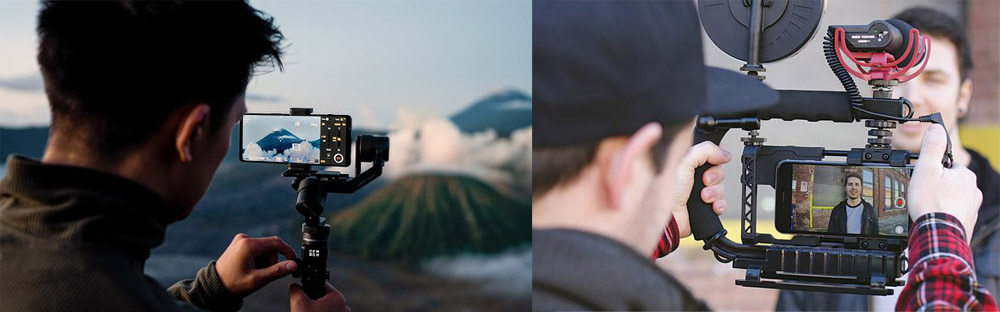
Cinematic Filmmaking: Uses advanced cinematic cameras with large sensors, high resolution (4K, 6K, or higher), and a wide color depth. Result: Clear images with high detail and enhanced visual appeal.
-
Regular Filmmaking: Typically uses simpler cameras or even mobile phones. Result: Image quality may be good, but it usually doesn't match the level of cinematic images.
-
-
Lighting
-
Cinematic Filmmaking: Lighting is a key element, meticulously adjusted to create a specific atmosphere and emotion in the scene. Techniques such as three-point lighting, high contrast, or natural lighting are used with precision.
-
Regular Filmmaking: Usually relies on natural or existing lighting in the scene. There is less focus on controlling and manipulating the lighting.
-
-
Camera Movement and Angles
-
Cinematic Filmmaking: Uses creative angles and complex camera movements (such as dolly shots, cranes, Steadicams) to add depth and dynamism to the scene. Composition and camera movements are carefully designed and executed.
-
Regular Filmmaking: Typically uses simple movements or static angles. Creativity in camera angles and movement is limited.
-
-
Composition and Framing
-
Cinematic Filmmaking: Follows composition rules such as the rule of thirds, symmetry, and balanced framing. Every shot is designed artistically and purposefully.
-
Regular Filmmaking: Composition is usually simple, without much attention to artistic details. Framing is often unplanned or casual.
-
-
Focus and Depth of Field
-
Cinematic Filmmaking: Uses techniques like deep focus, shallow focus, and rack focus to guide the viewer’s attention. Depth of field plays a crucial role in emphasizing the subject and creating a cinematic feel.
-
Regular Filmmaking: Depth of field and focus are often fixed, with little attention given to advanced techniques.
-
-
Editing and Post-Production
-
Cinematic Filmmaking: Post-production involves color grading, adjusting lighting and shadows, and adding special effects. This stage elevates the final quality of the images to a higher level.
-
Regular Filmmaking: Editing is done simply, or sometimes not at all. Images are presented to the audience without professional alterations.
-
-
Tools and Equipment
-
Cinematic Filmmaking: Uses advanced equipment such as specialized lenses, gimbals, dollies, cranes, and professional lighting systems.
-
Regular Filmmaking: Uses simpler or minimal equipment (standard cameras or smartphones).
-
-
Budget and Resources
-
Cinematic Filmmaking: Typically requires a high budget and large teams, including cinematographers, lighting designers, and post-production specialists.
-
Regular Filmmaking: Done with limited resources and by inexperienced or non-professional individuals.
-
-
Impact on the Audience
-
Cinematic Filmmaking: The goal is to create a deep emotional and visual impact. Every image is designed to evoke emotion or connect with the story.
-
Regular Filmmaking: More about documenting moments or conveying information, with less emotional impact on the audience.
In conclusion, cinematic filmmaking is a complex art and science that requires skill, creativity, and advanced equipment to create impactful and beautiful images. In contrast, regular filmmaking focuses on quickly and simply recording moments, with little to no artistic or deep emotional influence. The primary difference between them lies in the details and the final quality of the images.

Sadjad Jahangiri
![Verified]()