
Artificial intelligence is increasingly finding its way into professional animation software, but the most interesting developments are not necessarily the tools that attempt to generate complete animated sequences from a prompt. In many professional workflows, the more practical role for AI is much less dramatic: removing repetitive work, accelerating preparation, and giving artists more time to focus on creative decisions.
Toon Boom Ember is an example of this approach.
Originally introduced as a beta program in March 2025, Ember has since become integrated into Toon Boom's Harmony and Storyboard Pro ecosystem. Its development represents a significant shift in how AI can be incorporated into established 2D animation pipelines without attempting to replace the core artistic process.
From Generative AI to Production Assistance
The biggest distinction between Ember and many consumer-facing AI image or video tools is its position inside an existing production workflow.
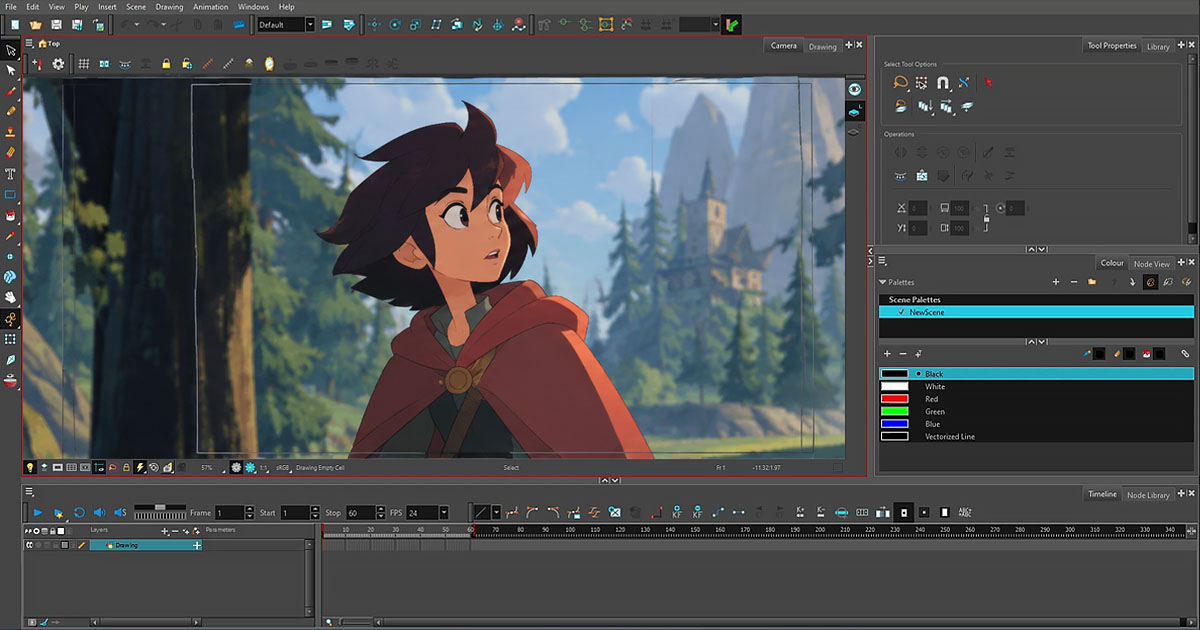
Rather than asking artists to leave their animation software, generate assets somewhere else, and then bring the results back into the project, Ember places AI-assisted operations directly inside Harmony and Storyboard Pro.
That distinction matters.
Professional animation involves a large amount of work that is necessary but not necessarily creative: isolating elements, preparing artwork, extending images, increasing resolution, analyzing scripts, organizing scenes, and preparing temporary voice or timing information.
These tasks can consume considerable production time even when they do not represent the artistic core of a shot.
Ember's approach is essentially to automate portions of this supporting work while leaving the final creative decisions with the artist.
This makes Ember less of an "AI animator" and more of an AI-assisted production layer.
Where Ember Can Actually Save Time
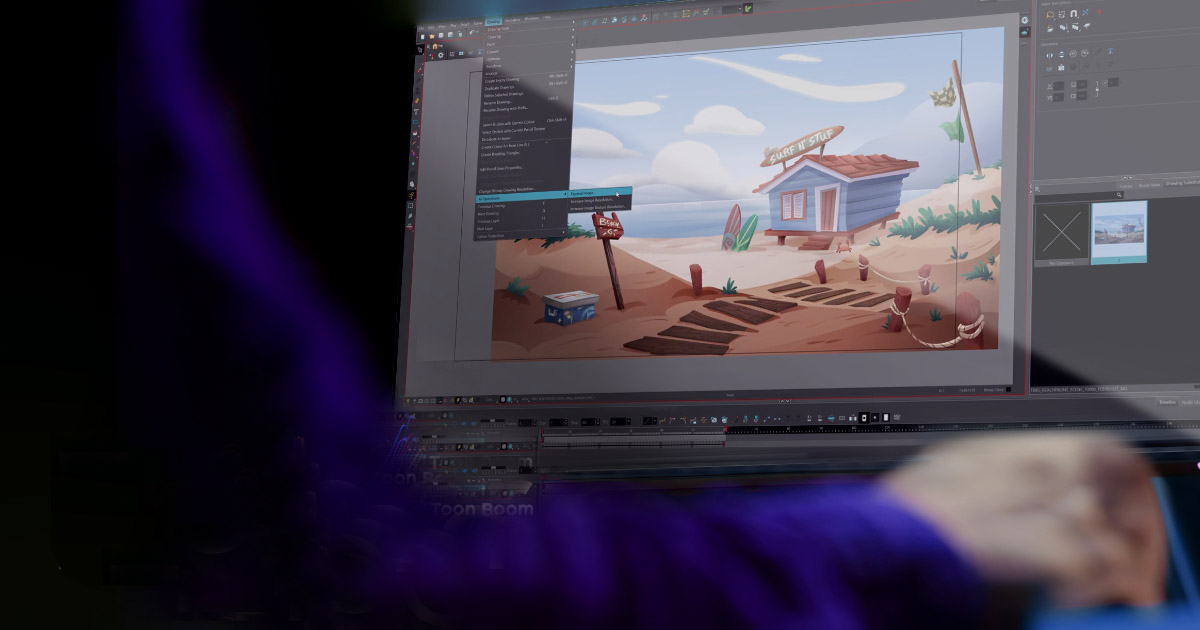
One of the more practical examples is AI masking.
Separating a character or object from an imported image can normally require manual selection and cleanup. Ember can assist with isolating individual elements so that they can subsequently be removed, replaced, or manipulated. The usefulness of this depends heavily on image quality, contrast, edges, and the complexity of the artwork, but even partial automation can reduce repetitive preparation work.
Image expansion and resolution enhancement address another common production problem.
Animation and storyboarding workflows frequently involve artwork that was not originally created at the resolution required for a particular shot, panel, presentation, or camera move. AI-based enlargement can make this material more usable without immediately requiring the artist to recreate everything manually.
This does not mean AI can magically turn poor artwork into production-quality artwork. Instead, its value is in reducing the amount of manual reconstruction required for certain assets.
That difference is important.
The strongest use case for these technologies is often saving an artist from doing a tedious task, rather than producing something that an artist would otherwise have created from scratch.
Storyboard Pro: AI Before Animation Even Begins
Ember is arguably more interesting when viewed from the perspective of pre-production.
Storyboard Pro can use Ember-related AI functionality for tasks such as script analysis, character voice selection and scene-length generation. These capabilities target an earlier stage of the pipeline, where a production is being transformed from a written concept into visual structure.
This is significant because animation production does not begin with drawing frames.
Before animation starts, teams need to understand the script, break it into scenes, determine timing, establish characters and locations, and build a visual plan.
AI assistance at this stage can potentially shorten the distance between a screenplay and a workable storyboard.
However, there is an important limitation: understanding a script is not the same as directing a sequence.
An AI system can identify characters, scenes and other information, but decisions about staging, composition, rhythm, acting and visual storytelling remain highly dependent on human judgment.
For professional animation, that distinction is crucial.
Ember Is Not Really About Replacing Animators
The more interesting question is therefore not whether Ember can replace an animator.
It can't.
The more relevant question is how much of an animator's time can be redirected from repetitive production tasks toward creative work?
That is where tools such as Ember become strategically important.
A production artist may spend only a few minutes on an individual repetitive operation. But across hundreds or thousands of panels, drawings and assets, those minutes accumulate into substantial production time.
If AI can reduce that overhead while keeping the artist in control, the effect can be much larger than the apparent simplicity of each individual feature suggests.
This is similar to the broader evolution of professional creative software. Many successful technologies did not replace artists; they changed which parts of the process artists had to perform manually.
The Credit-Based Model Changes the Equation
There is also a practical issue that distinguishes Ember from conventional software features: AI processing is associated with an Ember credit balance.
That means the technology is not simply another offline tool that performs unlimited operations locally. AI-assisted operations can involve a consumption-based model, which introduces an additional consideration for studios and individual artists.
For occasional use, this may be relatively insignificant.
For large productions, however, the economics become part of the workflow decision.
A studio evaluating Ember would need to consider not only whether an AI feature saves time, but whether the time saved justifies the associated AI usage and licensing model.
This is one of the areas where AI integration into professional software is likely to evolve considerably over the coming years.
The Quality Question
Another important limitation is that AI assistance does not eliminate the need for cleanup.
Image generation, masking, expansion and enhancement are inherently dependent on the source material. Ambiguous shapes, complex linework, overlapping elements, unusual artwork styles and low-quality source images can all reduce the reliability of automated results.
In animation, this problem becomes even more important because consistency matters.
A single good-looking generated image is not necessarily useful if the result cannot maintain the required visual characteristics across a sequence.
Professional animation requires consistency in:
-
character design
-
line quality
-
proportions
-
colors
-
textures
-
backgrounds
-
visual style
-
timing and continuity
This is one reason why AI tools that assist individual production steps can be more practical than systems attempting to generate entire animated sequences automatically.
The smaller the AI task, the easier it can be for the artist to inspect, correct and integrate the result.
Why Ember Matters for Toon Boom's Ecosystem
Ember's importance extends beyond its individual features.
Toon Boom has historically occupied a central position in professional 2D animation and storyboarding. Integrating AI directly into Harmony and Storyboard Pro therefore gives AI a path into established production pipelines rather than requiring studios to rebuild their workflows around new generative platforms.
That is potentially more important than any single Ember feature.
The direction suggests that the next generation of animation software may not necessarily be defined by fully automated animation. Instead, AI could become an invisible layer underneath traditional tools, assisting artists whenever a repetitive or technically difficult operation can be automated.
In that scenario, the artist still draws, animates, directs and makes creative decisions.
The software simply does more of the work surrounding those decisions.
Ember's Real Potential
The strongest argument for Ember is therefore not that it brings AI to animation.
AI is already everywhere.
Its real significance is that it attempts to place AI inside a professional animation pipeline.
That changes the question from:
"Can AI generate animation?"
to:
"Which parts of animation production should an artist still have to do manually?"
That is a much more useful question.
If AI can reliably handle preparation, isolation, image expansion, resolution enhancement and certain organizational tasks, artists can spend more time on acting, posing, timing, composition, storytelling and visual design—the areas where human judgment remains difficult to automate.
At the same time, Ember demonstrates that AI integration comes with new considerations, including output quality, consistency, licensing and AI-credit consumption.
Final Verdict
Toon Boom Ember is not a replacement for Harmony's traditional animation tools, nor is it an attempt to turn professional animation into a prompt-driven process.
Its more realistic role is that of an AI assistant embedded within an existing production environment.
That approach may ultimately prove more valuable for professional animation than the idea of generating an entire cartoon automatically.
The success of Ember will depend less on how impressive individual AI demonstrations look and more on a simpler question:
Does it save artists meaningful production time without creating more cleanup work than it removes?
If the answer continues to be yes as the technology develops, Ember could become an important part of the gradual transformation of professional 2D animation workflows—not by replacing the animator, but by reducing the amount of work that stands between an animator and the creative decisions that actually matter.
 References & Further Reading

Sadjad Jahangiri 




Add comment