
A few years ago, we published an article introducing the concept of ACES.This time, we’re taking a deeper and more technical look at the subject.Stay with me.
Note: If you plan to use ACES in your project, make sure that every tool and piece of software involved in your production pipeline supports it. Full compatibility between all stages of production is essential.
What Is ACES?
The Academy Color Encoding System (ACES) is a comprehensive, industry-standard color management framework designed for image and film production.
It was created to handle, process, and preserve color information across every stage of a production from capture, through post-production, all the way to final delivery.
ACES provides a unified color space and workflow that ensures color accuracy and consistency, no matter what cameras, formats, or display technologies are used. It emerged in response to the challenges that arose as the film industry transitioned from analog to digital workflows and began integrating multiple imaging technologies into a single production pipeline.
Key Applications of the ACES Color System
1. Color Management
ACES enables artists and filmmakers to maintain precise color control throughout all production stages from shooting and editing to color grading and final output.
2. Cross-Format Compatibility
It ensures that images captured on any camera, in any format (analog or digital), can be processed with exceptional consistency and accuracy.
3. Color Preservation
ACES is built to maintain the integrity of color information even as images move through different editing, compositing, or rendering processes.

The Origins and Purpose of the ACES Color System
The ACES (Academy Color Encoding System) was developed by the Academy of Motion Picture Arts and Sciences (AMPAS) in the early 2010s.
The main goal behind its creation was to establish an industry-wide color management standard that could be used across all stages of filmmaking from production and post-production to final exhibition.
Before ACES, the film industry faced significant challenges such as inconsistent color reproduction, loss of image fidelity, and difficulties in transferring accurate color data between different devices and formats.
Goals and Motivation
-
To create a unified, global standard for color management across the entire production pipeline.
-
To preserve color accuracy and consistency throughout every stage of production.
-
To simplify color transfer and processing between various formats, devices, and technologies.
-
To ensure compatibility with a wide range of cinematic equipment and software.
Not All Software Supports ACES
At present, not every software application supports the ACES color system.
However, many professional tools used in the film and television industry have implemented ACES compatibility in their recent versions.
Commonly supported applications include:
-
DaVinci Resolve – one of the most advanced tools for professional color grading and editing.
-
Adobe Premiere Pro – supports ACES through specific settings and third-party plugins.
-
Avid Media Composer
-
Houdini
-
Nuke
-
Flame (Autodesk)
-
After Effects – partial or indirect support through external tools and customized workflows.
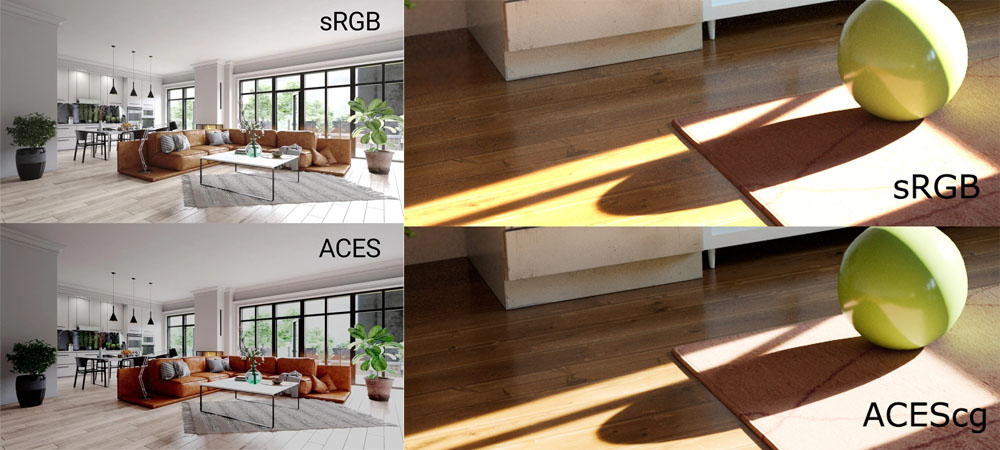
Why Not All Software Fully Supports ACES
Meanwhile, more general-purpose applications such as certain versions of Adobe Photoshop or other consumer-level editing tools may not offer full ACES support, or may require additional plugins to do so.
The main reasons why ACES isn’t universally supported across all software can be traced back to several key factors related to technical complexity, industry needs, and implementation challenges.
1. Technical Complexity of the ACES System
ACES is a highly sophisticated and technically demanding framework.
It requires an in-depth understanding of color management principles, wide-gamut color spaces, and complex color conversion processes.
-
Wide Color Gamut:
ACES uses extremely broad color spaces such as ACES AP0 and ACES AP1, both capable of encompassing nearly all colors visible to the human eye. -
Precision Color Processing:
The system relies on advanced algorithms and detailed color transformation pipelines to ensure consistency across multiple devices and formats. -
High Accuracy and Low Error Margin:
Because ACES is designed for precise color representation, even minor inaccuracies can affect results making the overall processing and calibration far more demanding.
For software aimed at casual users or basic image/video editing, incorporating this level of complexity often isn’t practical or cost-effective.
2. Need for Specialized Hardware and Software
ACES is primarily used in professional film and television production, especially during post-production and color grading stages where maximum color accuracy is required.
These workflows typically involve specialized tools and hardware designed to handle high bit-depth, wide-gamut color data such as DaVinci Resolve, Nuke, or Avid Media Composer.
On the other hand, consumer-oriented applications like certain versions of Adobe Photoshop or Premiere Pro are optimized for general use rather than high-end cinematic pipelines.
Implementing full ACES functionality in these environments would demand more advanced hardware, complex workflows, and higher system resources factors that limit their practicality for most users.
3. Higher Processing Requirements
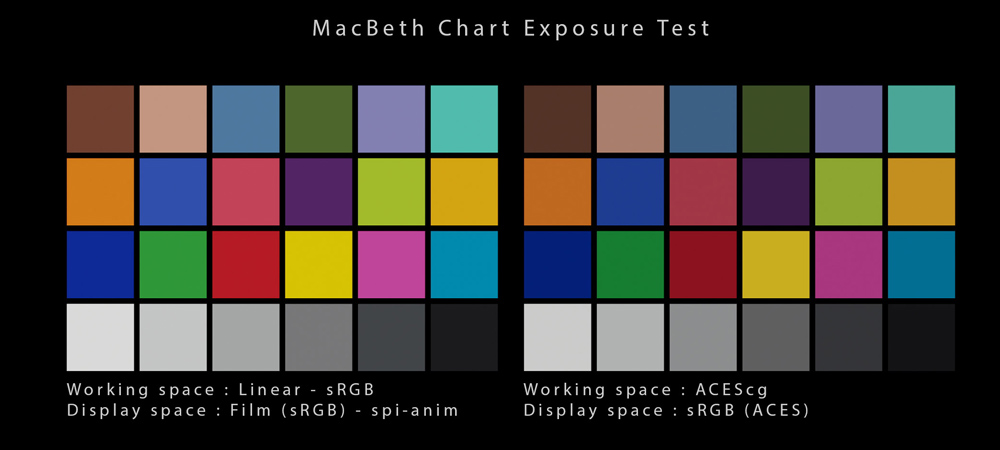
Color management in the ACES system demands significantly more computational power.
Since ACES handles a massive amount of high-precision color data, it often requires specialized hardware capable of processing large datasets efficiently.
Lightweight or consumer-oriented applications may not have access to such resources, making full ACES integration impractical.
This is one of the key reasons why support for ACES remains limited in some software environments.
4. Compatibility with Legacy Standards
Many existing applications still rely on older color systems such as sRGB, Rec.709, or Adobe RGB formats that are perfectly adequate for general use and for display on standard consumer devices like TVs, monitors, and laptops.
These legacy standards are simpler to implement and sufficient for most users, including many professionals who don’t need the extended color range or complex workflow of ACES.
In contrast, ACES introduces a much broader color space and more intricate processing requirements, which are often unnecessary for non-cinematic or small-scale production workflows.
5. Cost and Development Time
For many software developers, adding full ACES support represents a major investment of time and resources.
Implementing it requires extensive modifications to internal code structures, rendering engines, and color-processing algorithms.
Moreover, developers must also enable conversion between different color profiles and formats, which adds further complexity and maintenance costs.
As a result, many companies prioritize more widely used standards that meet the needs of the majority of their user base, leaving ACES adoption primarily to high-end production tools and studios.
6. Limited Use in Certain Fields
While ACES has become a standard in film, high-end television, post-production, and computer graphics, it’s not always necessary for every type of project.
For example, when producing online or web-based content, simpler color profiles such as sRGB or even Rec.709 are typically sufficient.
In these cases, using ACES can introduce unnecessary complexity, requiring more setup time, system resources, and color management expertise all without providing noticeable benefits for the final output.
7. Display Standard Compatibility
Not all display devices or playback systems support the ACES color space.
Standards like Rec.709 are optimized for home televisions, streaming platforms, and web delivery, while ACES is primarily designed for cinematic workflows and digital projection environments.
As a result, in most consumer or general-purpose contexts, ACES offers little to no advantage and in some cases, it may not be supported at all.
Summary
In short, the limited adoption of ACES across general-purpose software and devices can be attributed to several factors:
its technical complexity, higher processing demands, niche use cases, and the cost of implementation.
Therefore, full ACES integration is mainly found in professional, high-end production software used in the film and television industries.
Applications designed for general users or lightweight creative tasks tend to omit ACES support entirely or only offer partial, simplified implementations.
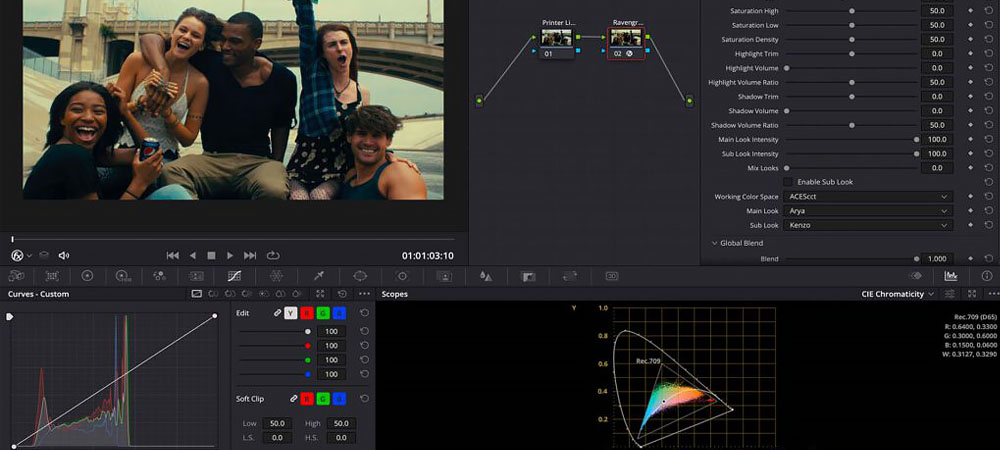
Converting Standard Image Color Profiles to the ACES System
Yes, it is entirely possible to convert standard image color profiles such as those based on sRGB or Adobe RGB into the ACES color space.
This process involves remapping the image’s color information into ACES AP1 or ACES AP0, both of which offer a much wider color gamut than traditional profiles like sRGB.
Professional tools such as DaVinci Resolve, Nuke, and other advanced color grading applications can perform these conversions using built-in or custom color management workflows.
The conversion typically includes several key steps, such as:
-
Transforming Color Primaries: Adjusting the base color coordinates from the source profile (e.g., sRGB or Adobe RGB) to match the ACES color space.
-
Applying Tone Mapping: Ensuring that brightness and contrast values are properly adapted to maintain visual accuracy and dynamic range in the new space.
In practice, accurate conversion requires first identifying the original color space of the image, then applying the correct Input Device Transform (IDT) to move the data into the appropriate ACES color space used in cinematic workflows.
While this process can be technically demanding and requires careful calibration, it allows standard imagery to be fully integrated into professional ACES-based pipelines.
In essence, ACES is a highly precise and advanced color management system designed for film and video production.
It provides a universal framework that maintains color fidelity across every stage of the production process from capture to post-production.
Although not all software currently supports ACES, many professional image and video editing tools do, and they make it possible to convert standard images into the ACES color space for consistent, film-grade color accuracy.
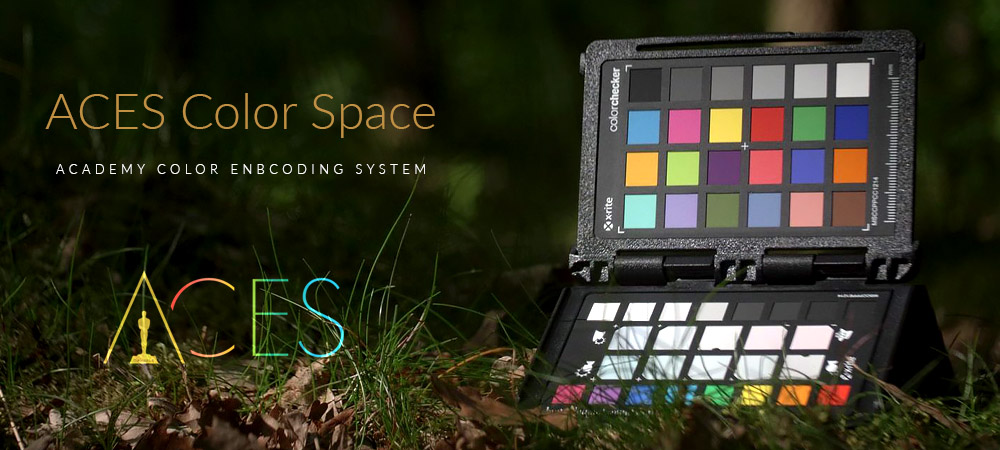
The Era Before ACES
Before the introduction of ACES, the film industry faced numerous challenges in color management and image consistency. Some of the most common issues included:
-
Color Inconsistency:
Footage captured on different cameras or processed through various editing systems often displayed noticeable variations in color accuracy and tone reproduction. -
Limited Color Spaces:
Color profiles such as sRGB, Rec.709, and Adobe RGB were commonly used across different devices and software, but their limitations in gamut and precision led to inconsistencies when exchanging material between systems. -
Display Variations:
When films were transferred or converted from one medium to another for example, from cinema projection to television broadcast, or from digital to analog formats significant color shifts and fidelity loss would occur.
In response to these challenges, the Academy Color Encoding System (ACES) was developed to provide a unified, accurate, and industry-wide color management standard for every stage of film and television production.
How ACES Addresses These Industry Needs
1. Unified and Standardized Color Management
The primary goal of ACES is to establish a single, standardized framework for color management throughout the entire production process from image capture to editing, grading, and final display.
By doing so, ACES ensures consistency and compatibility across a wide range of cameras, monitors, and post-production tools.
2. Preserving Color Accuracy Across the Workflow
ACES is designed to maintain precise color fidelity through every stage of production.
From camera acquisition to post-production and final mastering, color data remains accurate and consistent a crucial requirement for high-end cinematic and broadcast projects where visual precision is paramount.
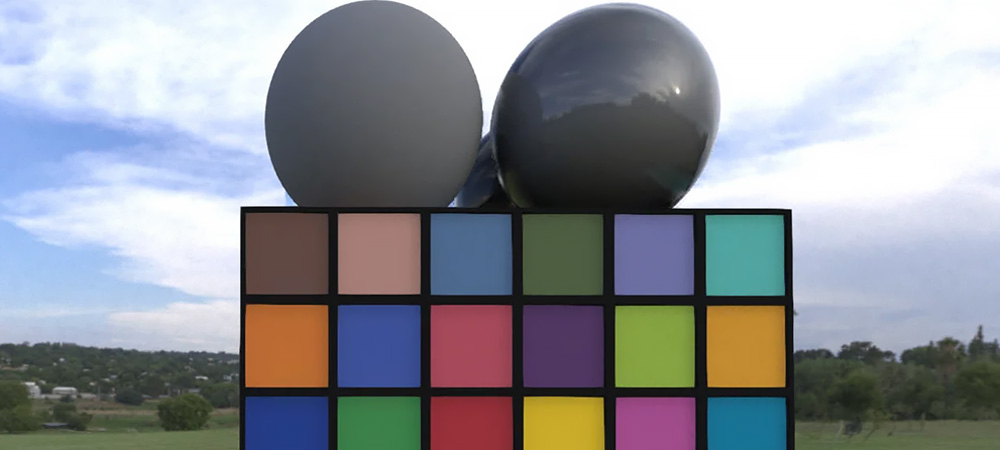
Broad Support for a Wide Range of Equipment and Technologies
ACES was specifically designed to support a diverse range of cinematic cameras and technologies.
It can accurately process and preserve color information from both digital and analog sources, ensuring consistent results across all stages of the production pipeline.
Compatibility with Display Standards
The ACES system is built to be display-agnostic, meaning it can adapt to various output environments including theatrical projection, broadcast television, and consumer digital systems.
This flexibility allows ACES to deliver precise, visually consistent color reproduction regardless of the final display medium.
Overcoming the Limitations of Narrow Color Gamuts
Earlier color profiles such as sRGB or Rec.709 were constrained by relatively limited color gamuts, preventing them from representing the full range of real-world or high-end digital camera colors.
ACES solves this problem by using expanded color spaces namely ACES AP0 and ACES AP1 which can encompass virtually the entire range of colors visible to the human eye.
This results in greater color accuracy and fidelity, especially for modern HDR and wide-gamut imaging workflows.
Improved Collaboration Across Teams and Tools
By introducing a universal color standard, ACES enables seamless collaboration among different departments involved in a production from cinematography and editing to color grading, 3D graphics, and final delivery.
Since every step of the workflow adheres to the same color reference framework, teams can exchange assets with full confidence that color appearance will remain consistent across all tools and devices.
Conclusion
Ultimately, the Academy Color Encoding System (ACES) represents a global and unified approach to color management in the film and television industry.
It was developed to address long-standing challenges in maintaining color accuracy, consistency, and interoperability across an increasingly complex digital ecosystem.
By ensuring precise color control from capture to final delivery, ACES has become a comprehensive and forward-looking solution now recognized as a fundamental standard in professional imaging and filmmaking.

Sadjad Jahangiri 





Add comment