
technology

  • Why USD Is Becoming the Language of Modern VFX

    Why USD Is Becoming the Language of Modern VFX

    Universal Scene Description is more than a 3D file format. It represents a different way of building, assembling, and managing complex digital scenes.

    For years, visual effects pipelines have relied on a collection of specialized applications. One artist may build an asset in Maya, another may simulate destruction in Houdini, another may handle lighting and rendering, while compositors work in Nuke. Each application has its own scene representation, data structures, and ways of working.

  • Stereoscopy Mechanism in VFX & Film Production

    Stereoscopy Mechanism in VFX & Film Production

    Stereoscopy is the process of creating or presenting two slightly different views of a scene—one for the left eye and one for the right—so that the visual system can perceive depth. In film production and visual effects (VFX), this affects much more than the final 3D presentation: it influences camera planning, shot design, compositing, quality control, and the way audiences experience a scene.

  • Stagecraft Technology in VFX | Integrating Real and Virtual Scenes

    LED Volume stage displaying a rocky desert environment for virtual production with a motorcycle and camera crane

    Virtual production has changed the way filmmakers plan and capture visual effects. One of the best-known examples is ILM StageCraft, a virtual production toolset developed by Industrial Light & Magic (ILM) that combines LED display technology, real-time rendering, camera tracking, and on-set workflows. Rather than treating every digital environment as a background to be added after filming, StageCraft can bring selected virtual environments onto the set while the cameras are rolling.

  • Nuke Stage vs. Unreal Engine: Virtual Production Workflows

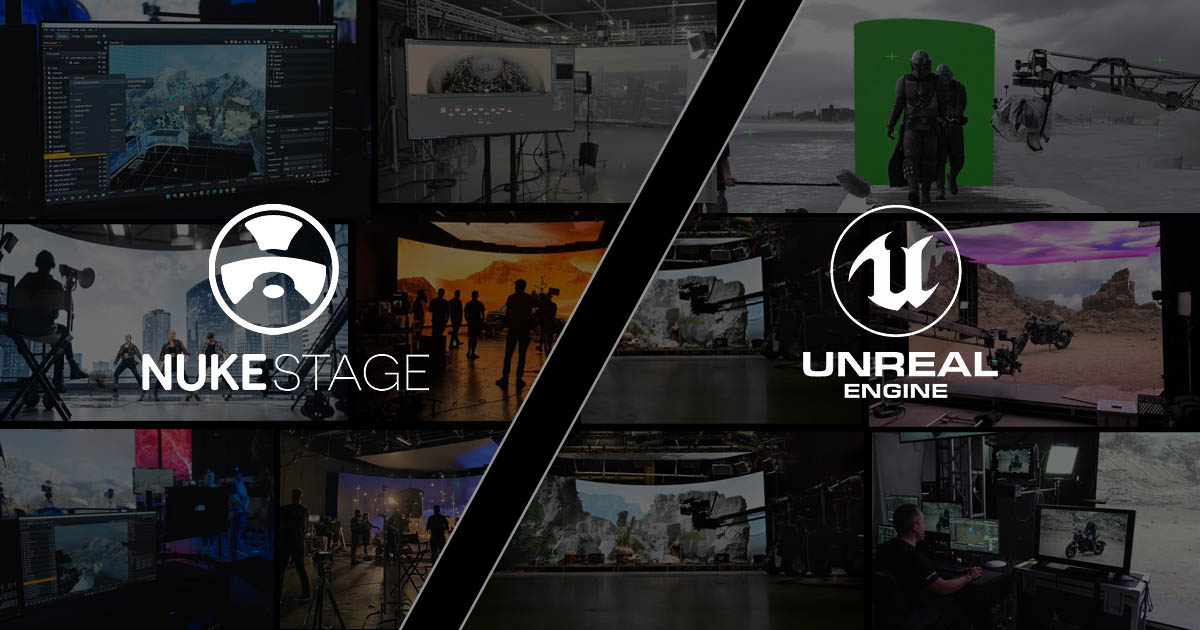
    Nuke Stage workflow compared with Unreal Engine LED wall virtual production on The Mandalorian set

    Virtual production has brought real-time rendering, LED stages, and digital environments into modern filmmaking, creating new ways for filmmakers and VFX teams to collaborate. Unreal Engine is widely associated with real-time environment creation and in-camera visual effects, but it is not the only option for bringing digital content onto a virtual production stage.

  • Motion Capture: Workflows & the Future of Digital Performance

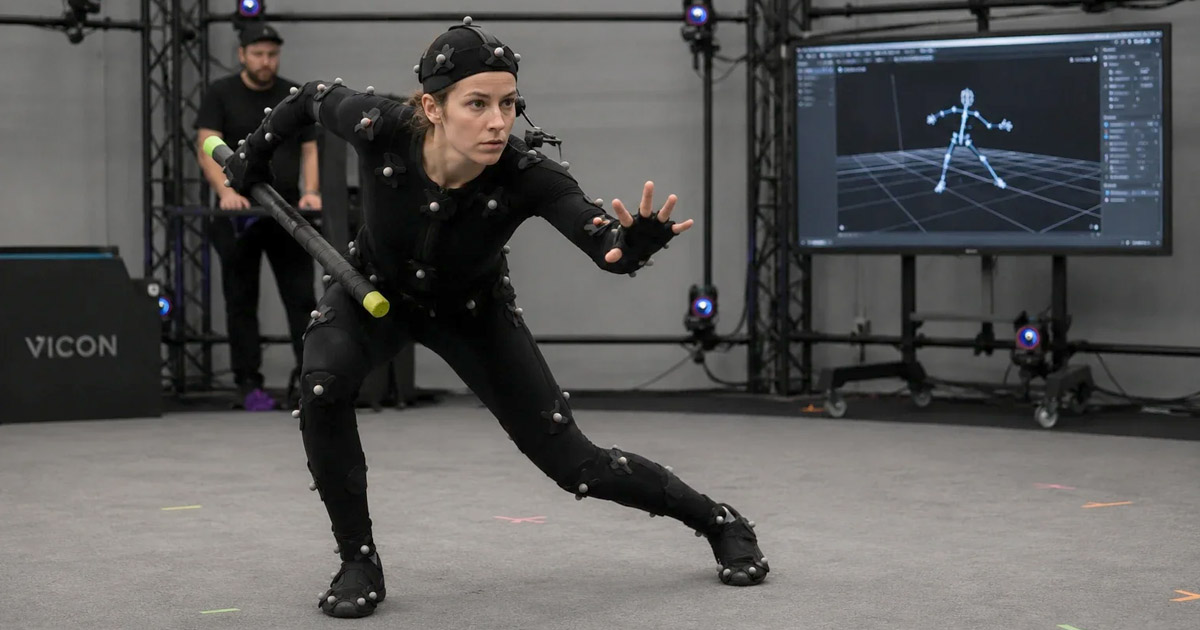
    Actor performing in a Vicon optical motion capture studio with tracking markers and a live skeletal preview

    Motion capture (MoCap) records the movement of people, animals, objects, or performances and converts that information into data that can drive digital characters. In film, visual effects (VFX), animation, and games, it can preserve the timing, weight, and spontaneity of a live performance—then give artists the freedom to adapt that performance to a different character, environment, or shot.

  • Motion Capture Knowledge in Film, Animation, and Gaming

    Motion Capture Knowledge in Film, Animation, and Gaming

    Motion capture, or MoCap, is the process of recording the movements of real humans or objects using specialized technology and transferring that data to digital models for use in films, animation, or video games. In this process, sensors or specialized cameras are placed on an actor’s body or on objects to accurately capture their motion. The recorded motion data is then transferred to a digital model, creating realistic animated movement.

  • Inside Redshift: How GPU Rendering Is Changing VFX and CGI

    Inside Redshift: How GPU Rendering Is Changing VFX and CGI

    Rendering has always been one of the most demanding stages of the 3D and VFX pipeline. As scenes become heavier, simulations become more complex, and artists expect faster feedback, the traditional CPU-based approach to rendering faces increasing pressure.

    This is where Redshift has become particularly interesting.

CinemaEngineer

At CinemaEngineer, we cover all topics related to Visual Effects, CGI, Cinema, and their related technologies. The activities of CinemaEngineer include education, research and development, and the execution of practical projects.

We entered this field in 2009 and have been working full-time on these goals ever since. Our specialized areas of activity include Visual Effects, 3D Simulations, Motion Graphics, Digital Design, 2D Animation, and Cinema Studies.

At CinemaEngineer, you can find both commercial products and educational materials, as well as free resources and gifts. In addition, important and specialized information is published on our blog through dedicated categories.

Learn More...

Dark Mode

Light Mode

Links

Email : info@cinemaengineer.com

Login